

Nearly seven years after Donald Trump infamously stated that there were “very fine people on both sides” of the deadly Unite the Right Rally in Charlottesville, Va., internet fact-checkers Snopes have published a piece declaring it “false” that Trump was referring to neo-Nazis and white supremacists.
This conclusion, however, fails to recognize the intricacies of Trump's rhetoric, which serves as a prime example of doublespeak.
In this newsletter, I will dissect Trump’s comments from August 15, 2017, placing them in their proper context to reveal how Snopes' assessment misses the mark. By examining the full exchange, I will illustrate how Trump's equivocations allowed him to condemn and defend the same group of people simultaneously, creating a facade of balance while implicitly legitimizing those who propagated hate.
I believe Snopes should have, at minimum, given this a rating of “mixture,” which it uses when a “claim has significant elements of both truth and falsity to it such that it could not fairly be described by any other rating.” Unfortunately, I did not receive a response when I contacted the author of the post and Snopes editorial staff via email. Below, I will make my case.
The context.
For a detailed analysis of the context of Trump’s many statements about Charlottesville, including those made on August 12th and 14th, please check out my post, “Donald Trump’s ‘Very Fine People’.” Portions of the below have been adapted from that.
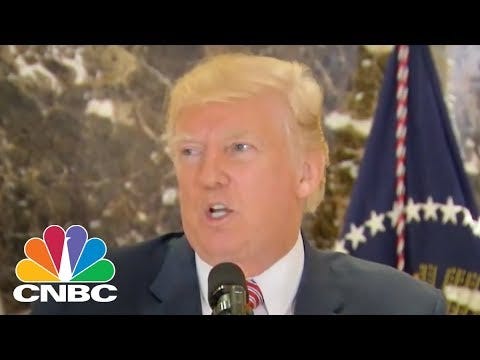
Standing before reporters at Trump Tower, the president sought to clarify earlier comments he’d made. On the 12th and 14th, he’d placed blame “on many sides” and condemned non-specific “hate,” respectively. What he ended up doing was making them worse.
Let’s go through the relevant portion of the exchange, question by question.
Reporter: "The CEO of Walmart said you missed a critical opportunity to help bring the country together. Did you?"
Trump: "Not at all. I think the country -- look, you take a look. I’ve created over a million jobs since I’m President. The country is booming. The stock market is setting records. We have the highest employment numbers we’ve ever had in the history of our country. We’re doing record business. We have the highest levels of enthusiasm. So the head of Walmart, who I know -- who’s a very nice guy -- was making a political statement. I mean -- I’d do it the same way. And you know why? Because I want to make sure, when I make a statement, that the statement is correct. And there was no way -- there was no way of making a correct statement that early. I had to see the facts, unlike a lot of reporters. Unlike a lot of reporters --
Reporter: "Nazis were there."
Reporter: "David Duke was there."
Trump: "I didn’t know David Duke was there. I wanted to see the facts. And the facts, as they started coming out, were very well stated. In fact, everybody said, ‘His statement was beautiful. If he would have made it sooner, that would have been good.’ I couldn’t have made it sooner because I didn’t know all of the facts. Frankly, people still don’t know all of the facts.
"It was very important -- excuse me, excuse me -- it was very important to me to get the facts out and correctly. Because if I would have made a fast statement -- and the first statement was made without knowing much, other than what we were seeing. The second statement was made after, with knowledge, with great knowledge. There are still things -- excuse me -- there are still things that people don’t know. I want to make a statement with knowledge. I wanted to know the facts."
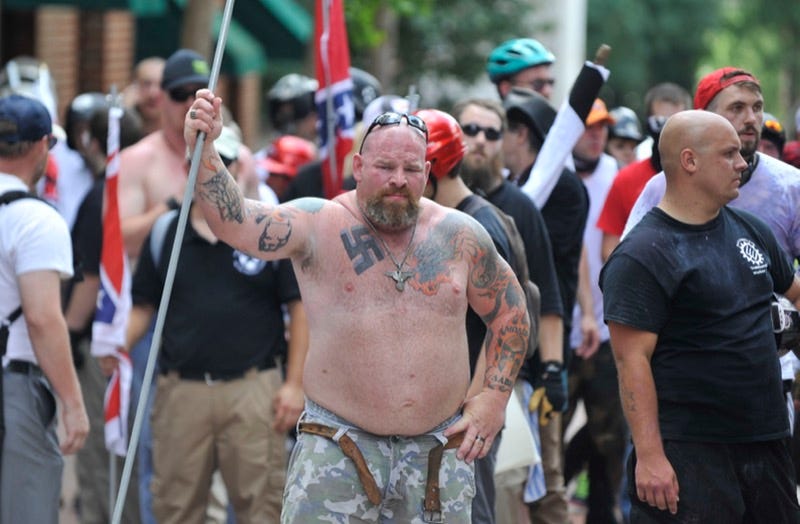
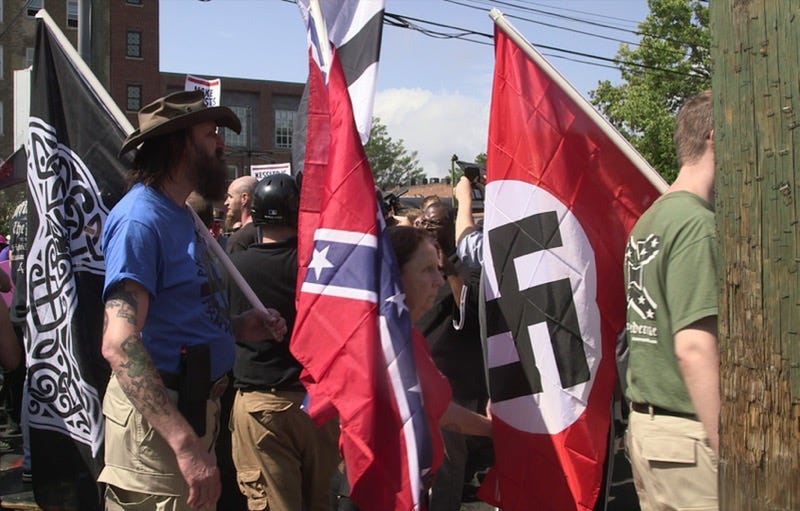
As I wrote in my “Donald Trump’s ‘Very Fine People’” post, the rally was organized by Jason Kessler, a self-proclaimed “white civil rights” activist, was promoted using Nazi iconography, and featured a number of prominent white nationalist and neo-Nazi speakers. This was well known by that time.
Reporter: "Two questions. Was this terrorism? And can you tell us how you’re feeling about your chief strategist, Stephen Bannon?"
Trump: "Well, I think the driver of the car is a disgrace to himself, his family, and this country. And that is -- you can call it terrorism. You can call it murder. You can call it whatever you want. I would just call it as the fastest one to come up with a good verdict. That’s what I’d call it. Because there is a question: Is it murder? Is it terrorism? And then you get into legal semantics. The driver of the car is a murderer. And what he did was a horrible, horrible, inexcusable thing.
(crosstalk)
Reporter: "Can you tell us broadly what your -- do you still have confidence in Steve?"
Trump: "Well, we’ll see. Look, look -- I like Mr. Bannon. He’s a friend of mine. But Mr. Bannon came on very late. You know that. I went through 17 senators, governors, and I won all the primaries. Mr. Bannon came on very much later than that. And I like him, he’s a good man. He is not a racist, I can tell you that. He’s a good person. He actually gets very unfair press in that regard. But we’ll see what happens with Mr. Bannon. But he’s a good person, and I think the press treats him, frankly, very unfairly."
(crosstalk)
Reporter: "Sen. (John) McCain said that the alt-right is behind these attacks, and he linked that same group to those who perpetrated the attack in Charlottesville."
Trump: "Well, I don’t know. I can’t tell you. I’m sure Senator McCain must know what he’s talking about. But when you say the alt-right, define alt-right to me. You define it. Go ahead."
Reporter: "Well, I’m saying, as Senator --"
Trump: "No, define it for me. Come on, let’s go. Define it for me."
Reporter: "Senator McCain defined them as the same group --"
Trump: "Okay, what about the alt-left that came charging at -- excuse me, what about the alt-left that came charging at the, as you say, the alt-right? Do they have any semblance of guilt?
"Let me ask you this: What about the fact that they came charging with clubs in their hands, swinging clubs? Do they have any problem? I think they do. As far as I’m concerned, that was a horrible, horrible day. Wait a minute. I’m not finished. I’m not finished, fake news. That was a horrible day --
"I will tell you something. I watched those very closely -- much more closely than you people watched it. And you have -- you had a group on one side that was bad, and you had a group on the other side that was also very violent. And nobody wants to say that, but I’ll say it right now. You had a group -- you had a group on the other side that came charging in, without a permit, and they were very, very violent."
This is where the discussion began to get interesting. The entire purpose of this press conference was to save Trump from the backlash he was getting over his “many sides” comments from days earlier, and here he was making the same argument once again. “What about the alt-left?” Here, he was equivocating.
Reporter: "Do you think that what you call the alt-left is the same as neo-Nazis?"
Trump: "Those people -- all of those people – excuse me, I’ve condemned neo-Nazis. I’ve condemned many different groups. But not all of those people were neo-Nazis, believe me. Not all of those people were white supremacists by any stretch. Those people were also there because they wanted to protest the taking down of a statue of Robert E. Lee."
An irritated Trump rushed to defend rally-goers. Sure, this rally was organized by neo-Nazis and white nationalists. Sure, the rally was promoted using neo-Nazi and white nationalist iconography. But maybe good people just… ended up there? That’s was the argument?
Reporter: "Should that statue be taken down?"
Trump: "Excuse me. If you take a look at some of the groups, and you see -- and you’d know it if you were honest reporters, which in many cases you’re not -- but many of those people were there to protest the taking down of the statue of Robert E. Lee.
"So this week it’s Robert E. Lee. I noticed that Stonewall Jackson is coming down. I wonder, is it George Washington next week? And is it Thomas Jefferson the week after? You know, you really do have to ask yourself, where does it stop?
"But they were there to protest -- excuse me, if you take a look, the night before they were there to protest the taking down of the statue of Robert E. Lee. Infrastructure question. Go ahead."
Here is where Trump finally explained who he would eventually be referring to when he would go on to say “fine people on both sides”: the people who were there “the night before” the Unite the Right rally.
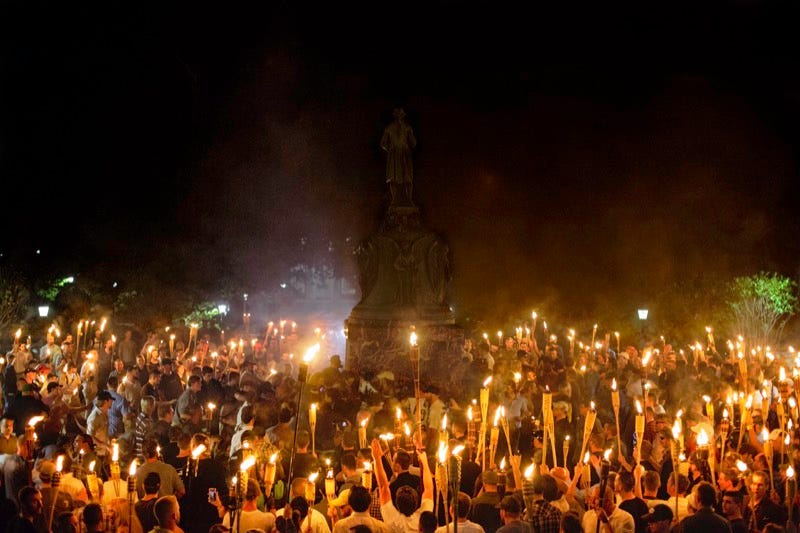
“The night before” was this:

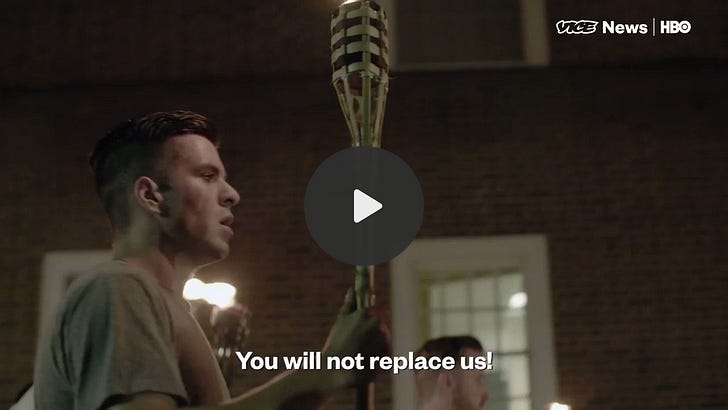
That was “the night before” that Trump was referring to. The infamous tiki torch march, the one with people chanting “Blood and soil!” and “You will not replace us!” and “Jews will not replace us!” Those were the people Trump was specifically referring to in his defense of attendees.
Reporter: "Should the statues of Robert E. Lee stay up?"
Trump: "I would say that’s up to a local town, community, or the federal government, depending on where it is located."
Reporter: "How concerned are you about race relations in America? And do you think things have gotten worse or better since you took office?"
Trump: "I think they’ve gotten better or the same. Look, they’ve been frayed for a long time. And you can ask President Obama about that, because he’d make speeches about it. But I believe that the fact that I brought in -- it will be soon -- millions of jobs -- you see where companies are moving back into our country -- I think that’s going to have a tremendous, positive impact on race relations.
"We have companies coming back into our country. We have two car companies that just announced. We have Foxconn in Wisconsin just announced. We have many companies, I say, pouring back into the country. I think that’s going to have a huge, positive impact on race relations. You know why? It’s jobs. What people want now, they want jobs. They want great jobs with good pay, and when they have that, you watch how race relations will be.
"And I’ll tell you, we’re spending a lot of money on the inner cities. We’re fixing the inner cities. We’re doing far more than anybody has done with respect to the inner cities. It’s a priority for me, and it’s very important."
Reporter: "Mr. President, are you putting what you’re calling the alt-left and white supremacists on the same moral plane?"
Trump: "I’m not putting anybody on a moral plane. What I’m saying is this: You had a group on one side and you had a group on the other, and they came at each other with clubs -- and it was vicious and it was horrible. And it was a horrible thing to watch.
"But there is another side. There was a group on this side. You can call them the left -- you just called them the left -- that came violently attacking the other group. So you can say what you want, but that’s the way it is.”
Trump made clear with this statement that he understood that all of the people, both the ones who went to the neo-Nazi rally because they wanted to stop the removal of Robert E. Lee’s statue and the counterprotesters there to protest against the Nazis, were on one of two sides. As he said, “You had one group on one side and you had a group on the other.”
Reporter: (Inaudible) "… both sides, sir. You said there was hatred, there was violence on both sides. Are the --"
Trump: "Yes, I think there’s blame on both sides. If you look at both sides -- I think there’s blame on both sides. And I have no doubt about it, and you don’t have any doubt about it either. And if you reported it accurately, you would say."
He repeated his “both sides” claim three times in two sentences. Again, there were two groups discussed here. If you attended that rally and weren’t working there as a journalist or as law enforcement, you were in one of those two groups: the white nationalist/neo-Nazi rally or the counter-protesters.
And finally, there’s the line at the center of this controversy
Reporter: "The neo-Nazis started this. They showed up in Charlottesville to protest --"
Trump: "Excuse me, excuse me. They didn’t put themselves -- and you had some very bad people in that group, but you also had people that were very fine people, on both sides. You had people in that group. Excuse me, excuse me. I saw the same pictures as you did. You had people in that group that were there to protest the taking down of, to them, a very, very important statue and the renaming of a park from Robert E. Lee to another name."
A reporter specifically said, “The neo-Nazis started this,” and Trump responded that there were “some very bad people in that group, but you also had people that were very fine people, on both sides.”
As I’ve tried to hammer home: Both. Two. According to Trump, there were “very fine people” in both of the two groups, which we’ve repeatedly established were the people who went to the rally organized by neo-Nazis and people who protested the neo-Nazis. Those were your “sides.” Trump, here, said that within the group of people at the neo-Nazi rally, where “the night before” they were marching with tiki torches and chanting “Jews will not replace us,” there were “very fine people.”
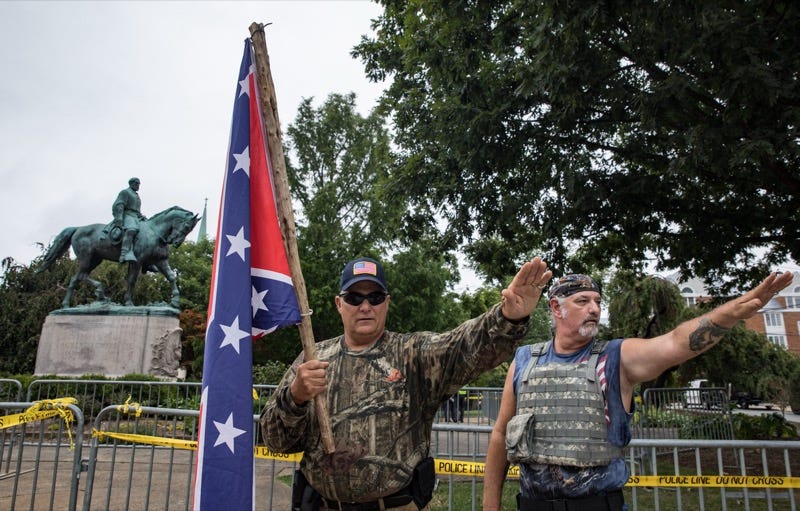
It’s never been a matter of whether every single person who went to that rally self-identified themselves as a neo-Nazi or a white nationalist, but that he said there were “very fine people” within each of the two groups. Unite the Right was a neo-Nazi rally. It did not matter whether every attendee called themselves neo-Nazis. If you show up to an event where there are people walking around with swastikas and chanting “Jews will not replace us,” then you’re absolutely not a “very fine” person.
Reporter: "George Washington and Robert E. Lee are not the same."
Trump: "George Washington was a slave owner. Was George Washington a slave owner? So will George Washington now lose his status? Are we going to take down -- excuse me, are we going to take down statues to George Washington? How about Thomas Jefferson? What do you think of Thomas Jefferson? You like him?"
Reporter: "I do love Thomas Jefferson."
Trump: "Okay, good. Are we going to take down the statue? Because he was a major slave owner. Now, are we going to take down his statue?
"So you know what, it’s fine. You’re changing history. You’re changing culture. And you had people -- and I’m not talking about the neo-Nazis and the white nationalists -- because they should be condemned totally. But you had many people in that group other than neo-Nazis and white nationalists. Okay? And the press has treated them absolutely unfairly.
"Now, in the other group also, you had some fine people. But you also had troublemakers, and you see them come with the black outfits and with the helmets, and with the baseball bats. You had a lot of bad people in the other group."
Setting aside the fact that yes, Lee and Jefferson both owned slaves, and yes, that’s something we should obviously condemn and shouldn’t celebrate, it’s extremely bizarre that Lee’s decision to take up arms against the United States and lead an army in one of history’s bloodiest conflicts to that point isn’t seen as a reason to rethink whether he should be treated as a hero. Also, it’s worth noting that this statue was commissioned around the time that a lot of confederate statues were being installed around the country as a show of support for Jim Crow-era policies. But sure, heritage… or something.
This is the part that the right and now Snopes seem to have latched onto: “I’m not talking about the neo-Nazis and the white nationalists — because they should be condemned totally. But you had many people in that group other than neo-Nazis and white nationalists. Okay? And the press has treated them absolutely unfairly.”
This was Trump saying that there were people at the neo-Nazi rally who didn’t self-identify as either neo-Nazis or white nationalists, and that those people, in attendance in support of the neo-Nazi rally, were “very fine people” who were treated “absolutely unfairly” by the press.
Even after that, he was given a chance to clean it up…
Reporter: "Sir, I just didn’t understand what you were saying. You were saying the press has treated white nationalists unfairly? I just don’t understand what you were saying."
Trump: "No, no. There were people in that rally -- and I looked the night before -- if you look, there were people protesting very quietly the taking down of the statue of Robert E. Lee. I’m sure in that group there were some bad ones. The following day it looked like they had some rough, bad people -- neo-Nazis, white nationalists, whatever you want to call them.
"But you had a lot of people in that group that were there to innocently protest, and very legally protest -- because, I don’t know if you know, they had a permit. The other group didn’t have a permit. So I only tell you this: There are two sides to a story. I thought what took place was a horrible moment for our country -- a horrible moment. But there are two sides to the country.
"Does anybody have a final --
One of Trump’s strategies has always been to stake out every possible position on any given topic. That’s exactly what he did here. He talked himself into a knot. He used doublespeak, and Snopes fell for it.
But again, he went back to saying that he “looked the night before — if you look, there were people protesting very quietly the taking down of the statue of Robert E. Lee.” That was not true. “The night before” was the tiki torch march. People were chanting, “Jews will not replace us” and “Blood and soil.” Were there “very fine people” within that group? No. There weren’t. Trump referred to some of the attendees of a neo-Nazi rally as “very fine people.”
The effort to rewrite history.
By the following year, conservatives, including many who had originally condemned Trump’s Charlottesville response, had come around to the idea that it was actually a “hoax” that Trump had ever said there were “fine people on both sides” of the neo-Nazi rally. Led by the likes of Dilbert creator Scott Adams, the right-wing website The Daily Caller, and PragerU, conservative media outlets began pointing to individuals who attended the rally but didn’t personally identify as neo-Nazis or white nationalists as evidence that Trump wasn’t referring to those groups. Or, as Snopes did, falling for Trump’s doublespeak.

:format(webp):no_upscale()/cdn.vox-cdn.com/uploads/chorus_asset/file/16194207/791.jpg)
:format(webp):no_upscale()/cdn.vox-cdn.com/uploads/chorus_asset/file/16194132/Screen_Shot_2019_04_26_at_11.47.41_AM.png)
Did Trump specifically say, “Some neo-Nazis are fine people?” No. Did he say that there were “very fine people on both sides” of a neo-Nazi rally? Yes!
Trump’s presidential campaign is now pointing to Snopes’ erroneous fact check to claim that Joe Biden and Democrats have been lying for years about something we all saw and heard with our own eyes and ears. This is shameful on Snopes’ part.
Biden’s 2020 campaign announcement was centered on Trump’s Charlottesville remarks. In his announcement video, candidate Biden called Charlottesville “home to a defining moment for this nation in the last few years.”
“And that’s when we heard the words of the president of the United States that stunned the world and shocked the conscience of this nation,” said Biden. “He said there were, quote, ‘some very fine people on both sides.’ Very fine people on both sides? With those words, the president of the United States assigned a moral equivalence between those spreading hate and those with the courage to stand against it.”
Biden didn’t lie. Those were, in fact, Trump’s very words, and this multi-year effort to rewrite history seeks to undermine and erase just how vile the Trump years could be. He wants us to forget just how awful things actually were when he was president so he can once again take charge of the country and lead it into darkness.
Conclusion.
Snopes’ conclusion that it is "false" to claim Trump called neo-Nazis and white nationalists "very fine people" overlooks the then-president’s use of doublespeak. Trump’s remarks on August 15, 2017, deliberately blurred the lines between condemning and excusing hate groups. By stating that there were “very fine people on both sides,” he equivocated, offering a shield of respectability to an event organized by avowed white supremacists and neo-Nazis. The rally's context — marked by swastikas, torches, and chants of “Jews will not replace us” — renders any defense of participants as “fine people” indefensible.
Snopes fell for the semantic dance Trump performed, where implicit validation undercut explicit condemnation. By focusing on his technical disavowal of neo-Nazis, Snopes ignored the broader and more pernicious impact of his rhetoric. His words provided a veneer of legitimacy to those who shared a stage with hate. Trump's tactic of occupying every possible rhetorical position allows his supporters to cherry-pick the most favorable interpretation, a classic case of doublespeak designed to muddy the waters of public discourse.
Labeling this as "false" without acknowledging the nuance of doublespeak misrepresents the reality of Trump’s rhetoric. This is not just about parsing words; it’s about understanding the implications of those words in their entirety. Failing to recognize this allows history to be rewritten in a way that sanitizes the dangerous equivocation of those in power. Snopes, in its eagerness to fact-check, missed the forest for the trees. In doing so, they inadvertently aided in the revisionist effort to downplay the true nature of Trump’s remarks. We must remain vigilant against such simplifications, ensuring that the full context and impact of public statements are considered to safeguard the truth from being obscured by clever manipulation.
Great article, Parker. Reminds me of this statement: If you are sitting at a table with 10 people who openly identify as Nazis, how many Nazis do you have? The answer is 11.
The desperation to find some way to say Trump isn’t that which he openly and proudly says he is is not going away.
And those 2017 questions, FFS. How many press conferences does a Republican get to put together a semi coherent, recognizably human statement? They’re begging him to be a human being (which he refuses), rather than asking what they would ask any Democrat, which would be some variation of “How much have you embarrassed yourself, and how will you deal with the fact that most of the country has no reason to respect you?”