

The Kill Switch
How Bari Weiss handed the Trump administration a veto over CBS News

In 1995, 60 Minutes made a decision that nearly destroyed the program. Producers killed an interview with Jeffrey Wigand, a tobacco industry whistleblower who had evidence that cigarette companies knew their products were addictive and carcinogenic. CBS’s lawyers were worried about a potential lawsuit, so the interview got shelved. The story eventually came out anyway, the lawyers’ fears proved overblown, and 60 Minutes spent years trying to rebuild its credibility. The whole debacle became the basis for The Insider, a 1999 film starring Russell Crowe and Al Pacino that portrayed CBS executives as cowards who caved to corporate pressure at the expense of the public interest.
It was, by any measure, a low point in the history of American broadcast journalism.
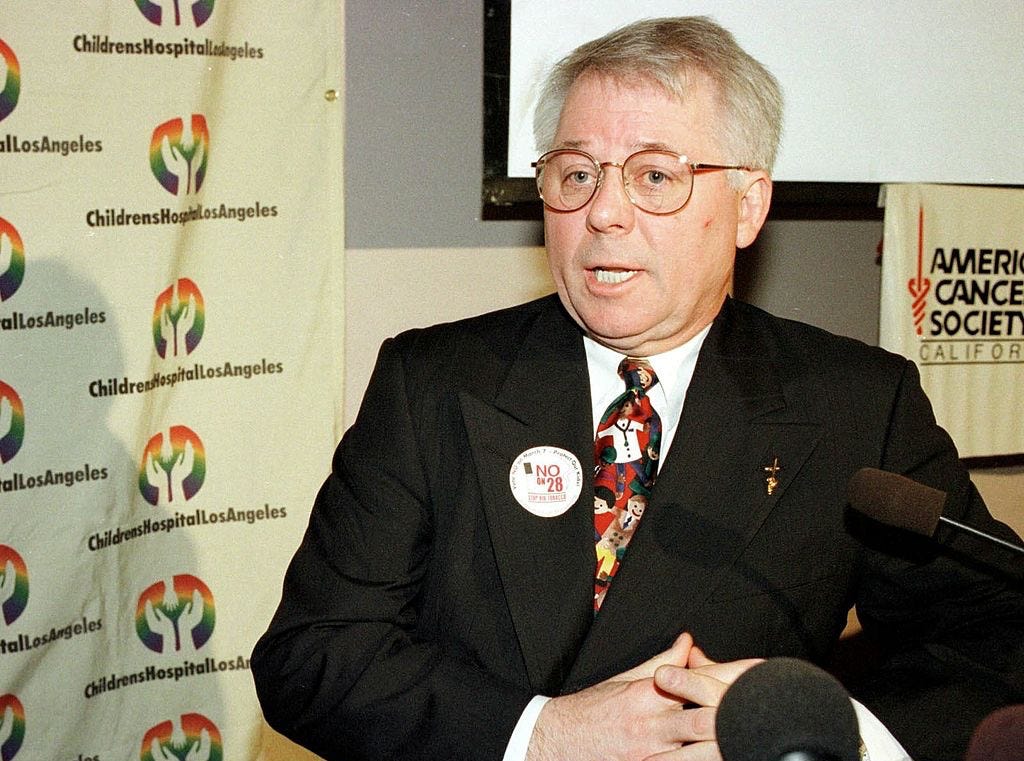
On Sunday, 60 Minutes correspondent Sharyn Alfonsi sent an internal memo to colleagues warning that CBS was repeating that history. The network had just killed her story about Venezuelan migrants who were deported to El Salvador’s CECOT mega-prison, where they were allegedly tortured, beaten, and subjected to sexual violence. The segment had been promoted on social media for days. It had been screened five times. It had been cleared by CBS’s lawyers and its Standards and Practices division. It was, by all accounts, ready to air.
Then Bari Weiss, the new editor-in-chief of CBS News, pulled it.
“CBS spiked the Jeffrey Wigand interview due to legal concerns, nearly destroying the credibility of this broadcast,” Alfonsi wrote in her memo. “It took years to recover from that ‘low point.’ By pulling this story to shield an administration, we are repeating that history, but for political optics rather than legal ones.”
That distinction matters. In 1995, CBS killed a story because executives were afraid of getting sued. It was cowardly, but at least there was a concrete fear driving the decision. In 2025, CBS killed a story because the Trump administration declined to comment on it.
That’s the official explanation, anyway. And if that standard holds, American journalism is in serious trouble.
What happened
Let me walk through the timeline here, because the speed of it is remarkable.
On Friday morning, CBS sent out a press release promoting the upcoming segment. “Inside CECOT,” it was called. The network described it as a look at “one of El Salvador’s harshest prisons,” featuring interviews with recently released deportees who would describe “the brutal and torturous conditions they endured.” CBS ran promotional clips on the air and on social media. The 60 Minutes website had a page up for the segment.
On Friday night, Donald Trump held a rally in North Carolina. He complained about 60 Minutes, saying the program had “treated me worse under the new ownership” and that if the Ellisons, who now control CBS’s parent company, “are friends, I’d hate to see my enemies!”
On Saturday morning, Weiss weighed in with concerns about the segment. According to CNN’s reporting, she took issue with the lack of an on-camera response from the Trump administration. She suggested the segment needed an interview with Stephen Miller, the White House deputy chief of staff, and provided his contact information to 60 Minutes staff.
By Sunday afternoon, the story was dead. CBS posted on social media that the segment would “air in a future broadcast.” The promotional page was taken down. The clips were removed from YouTube. A CBS spokesperson told reporters the segment “needed additional reporting.”
Alfonsi wasn’t having it. In her memo, she wrote that she and her producer had asked for a call with Weiss to discuss the decision. Weiss “did not afford us that courtesy/opportunity.”
“Our story was screened five times and cleared by both CBS attorneys and Standards and Practices,” Alfonsi wrote. “It is factually correct. In my view, pulling it now, after every rigorous internal check has been met, is not an editorial decision, it is a political one.”
She went further. The segment’s reporters had reached out to the Department of Homeland Security, the White House, and the State Department for comment. None of them responded. According to Alfonsi, this silence was strategic.
“Government silence is a statement, not a VETO,” she wrote. “Their refusal to be interviewed is a tactical maneuver designed to kill the story. If the administration’s refusal to participate becomes a valid reason to spike a story, we have effectively handed them a ‘kill switch’ for any reporting they find inconvenient.”
That phrase, “kill switch,” is the right way to think about what just happened. If the new standard at CBS News is that critical stories about the government can’t air unless the government agrees to participate, then the government has been given the power to suppress any coverage it doesn’t like. All officials have to do is refuse to engage. No comment becomes a veto.
Think about what this standard would have meant historically. No Pentagon Papers coverage, since the Nixon administration certainly wasn’t going to sit for an interview about it. No Abu Ghraib reporting, since the Bush administration didn’t exactly want to chat about torture photos. No Watergate, unless the burglars agreed to go on camera. The entire history of adversarial journalism depends on the premise that reporters can publish true, well-sourced information even when the subjects of that information would prefer they didn’t. What Weiss has done is abandon that premise.
The free speech champion who has always been selective about whose speech she defends
Bari Weiss has spent years building a brand as a defender of free expression and a critic of censorship in mainstream institutions.
In 2020, she resigned from the New York Times with a public letter accusing her colleagues of fostering an “illiberal environment” where certain viewpoints were suppressed. She went on to co-found The Free Press, a publication that positioned itself as a corrective to mainstream media’s alleged ideological blind spots. She gave a TED Talk about building alternatives to legacy media. She cultivated an image as someone willing to publish uncomfortable truths that established outlets were too squeamish or too captured to touch.
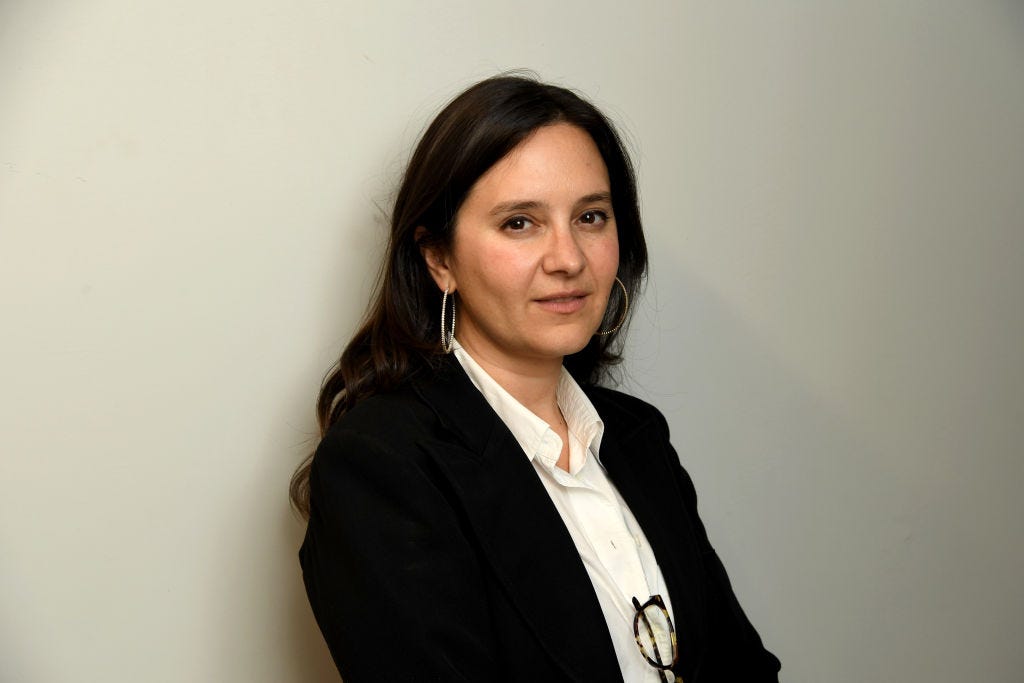
But Weiss’s commitment to free speech has always been selective. Her career didn’t start with defending controversial voices; it started with trying to get people fired for expressing the wrong opinions about Israel.
As a student at Columbia University in the mid-2000s, Weiss co-founded a group called Columbians for Academic Freedom, which targeted Arab and Muslim professors in the Middle East studies department. The campaign, which grew out of a documentary called “Columbia Unbecoming,” accused professors like Joseph Massad of intimidating Jewish and pro-Israel students. As Glenn Greenwald documented in a 2017 article for The Intercept, the New York Civil Liberties Union condemned the effort as a “witch hunt designed to punish Israel critics.” Columbia conducted an investigation and found the allegations largely baseless.
In a follow-up piece at The Intercept in 2018, Greenwald described the activism Weiss helped lead as “designed to ruin the careers of Arab professors by equating their criticisms of Israel with racism, anti-Semitism, and bullying.” Several of the targeted professors lacked tenure at the time, meaning they were vulnerable to exactly the kind of pressure Weiss’s group applied.
This wasn’t a one-time thing. Weiss also participated in a campaign against Nadia Abu El-Haj, a Palestinian-American anthropologist at Barnard who had written a scholarly book examining the archaeological claims underlying Israeli territorial claims. Despite Abu El-Haj’s academic credentials and the awards her book had received, an online petition emerged demanding she be denied tenure. Weiss wrote a column attacking Abu El-Haj’s scholarship in Haaretz.
And as recently as 2019, Weiss was still at it. When Jewish cartoonist Eli Valley was invited to speak at Stanford, a law student wrote an op-ed comparing Valley’s satirical work to Nazi propaganda and calling for his talk to be canceled. Weiss amplified the piece on Twitter, thanking the author and endorsing his characterization of Valley’s art as “hatred that gloms onto Jews and the Jewish State.” Valley, who had drawn satirical cartoons critical of right-wing Jewish figures and Israeli policies, responded that Weiss’s intervention forced Stanford to move his presentation to a closed venue with security due to safety concerns. As I wrote at Media Matters at the time, this was “precisely the kind of campus controversy” that Weiss would have decried if the politics were reversed: a student group trying to intimidate a speaker out of appearing on campus. Instead, she sided with those doing the intimidating.
So: a career that began with trying to silence Arab professors, that continued with attacking a Palestinian-American scholar’s tenure bid, and that as recently as six years ago involved amplifying calls to cancel a Jewish cartoonist because his politics on Israel were wrong. This is the person now running CBS News. This is the person who killed a factually accurate, legally cleared story about human rights abuses because the administration wouldn’t comment on it.
The irony is almost too much to bear. Weiss built her brand warning about censorship in mainstream newsrooms. Now she runs a mainstream newsroom and she’s the one doing the censoring. The difference is that when she was at the Times, she complained about the suppression of certain opinions and viewpoints. What she’s suppressing at CBS isn’t opinion. It’s documented reporting on torture.
And it’s not just the decision to kill the story that’s telling. According to NPR’s reporting, Weiss objected to the segment’s use of the term “Venezuelan migrants” to describe the deportees. She preferred “illegal immigrants,” the term favored by the Trump administration. But many of the men sent to CECOT weren’t in the country illegally at all. They had applied for asylum and were awaiting decisions on their applications. Calling them “illegal immigrants” isn’t a neutral editorial choice. It’s adopting the administration’s framing as your own.
This is what alignment looks like. It’s not just killing stories the government doesn’t want aired. It’s policing language to make sure the stories that do air reflect the government’s preferred terminology.
On Monday, Weiss addressed CBS staff about the decision. “I held a 60 Minutes story because it was not ready,” she said. “While the story presented powerful testimony of torture at CECOT, it did not advance the ball. The Times and other outlets have previously done similar work.”
That explanation doesn’t hold up. The whole point of television news is to bring stories to audiences who might not read the New York Times or Human Rights Watch reports. “Someone else already covered this” has never been a reason to kill a 60 Minutes segment. If it were, the program would hardly ever air anything.
What they didn’t want you to see
So what was actually in the segment CBS killed?
We don’t know for sure, since it hasn’t aired. But we know what the underlying story is, because human rights organizations have been documenting it for months.
In March and April of this year, the Trump administration deported roughly 250 Venezuelan men to El Salvador. They weren’t sent back to Venezuela, their home country. They were sent to a country most of them had no connection to whatsoever, and they were imprisoned in CECOT, a mega-prison that El Salvador’s president, Nayib Bukele, built as part of his crackdown on gang violence.
The administration claimed these men were members of the Tren de Aragua gang, a Venezuelan criminal organization. But according to Human Rights Watch, which conducted extensive interviews with 40 of the deportees after their release, approximately half of them had no criminal records at all. Only 3% had been convicted in the United States for a violent crime. Many had applied for asylum. Some had fled Venezuela specifically because they were being persecuted by the Maduro government or threatened by the very gangs the U.S. accused them of belonging to.
None of them got a hearing. None of them got to argue their case. They were put on planes in the middle of the night and sent to a prison in a foreign country, where they were held for four months with no access to lawyers, no contact with their families, and no idea if they would ever get out.
And they were tortured.
That’s not my characterization. That’s the conclusion of Human Rights Watch and Cristosal, a Salvadoran human rights organization, after interviewing the men and reviewing the evidence. Their report, titled “You Have Arrived in Hell,” documents systematic beatings, sexual violence, and inhumane conditions. The men were beaten when they arrived at the prison. They were beaten during daily cell searches. They were beaten for speaking too loudly, for showering at the wrong time, for requesting medical treatment. They were beaten after visits from the International Committee of the Red Cross, apparently as punishment for talking to outsiders.
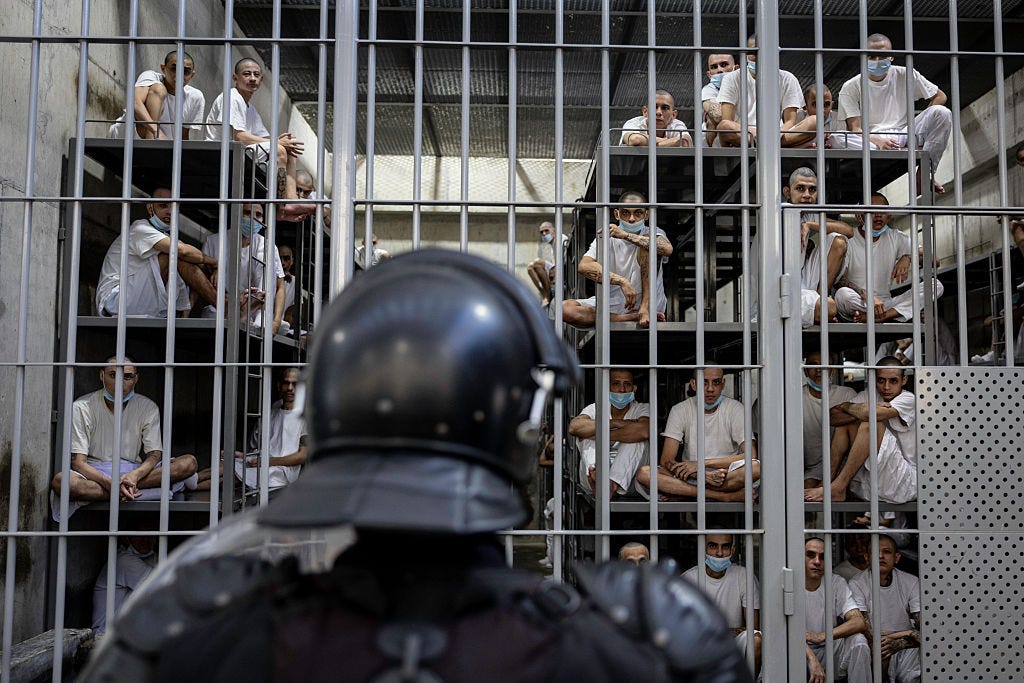
Several men told Human Rights Watch they were subjected to sexual violence. One described being taken to a solitary confinement area called “the Island,” where guards sexually assaulted him and forced him to perform oral sex. The report notes that other victims were likely unwilling to speak about what happened due to stigma.
Human Rights Watch concluded that these weren’t isolated incidents by rogue guards. The abuses were “systematic violations that took place repeatedly” and appeared to be “part of a practice designed to subjugate, humiliate, and discipline detainees.” The organization also concluded that the Trump administration was “complicit” in torture and enforced disappearances by sending people to a facility where abuse was entirely foreseeable.
This is what Sharyn Alfonsi was trying to report. This is what CBS decided Americans shouldn’t see. Should this segment ever air, it’s safe to assume it will have been significantly edited to shield the Trump administration from criticism.
Follow the money
Why would Bari Weiss, or the Ellisons who pay her salary, care about protecting the Trump administration from critical coverage?
The answer probably has as much to do with business as it has to do with ideology. It started before they even arrived.
Back in April, Bill Owens, the executive producer of 60 Minutes, resigned after 37 years at CBS News. “It’s clear that I’ve become the problem. I am the corporation’s problem,” he told his staff, his voice breaking. The catalyst was a $10 billion lawsuit Trump had filed against CBS over what he called a “deceptively edited” interview with Kamala Harris during the 2024 campaign. Legal experts considered the suit frivolous, but that didn’t matter. Shari Redstone, then the controlling shareholder of Paramount, was trying to secure Trump administration approval for the company’s sale to Skydance, the company run by David Ellison. She reportedly pushed for a settlement with Trump despite the absurdity of his claims. Owens refused to go along with the corporate pressure and was pushed out.
“Over the past months, it has become clear that I would not be allowed to run the show as I have always run it, to make independent decisions based on what was right for 60 Minutes, right for the audience,” Owens wrote in his resignation memo.
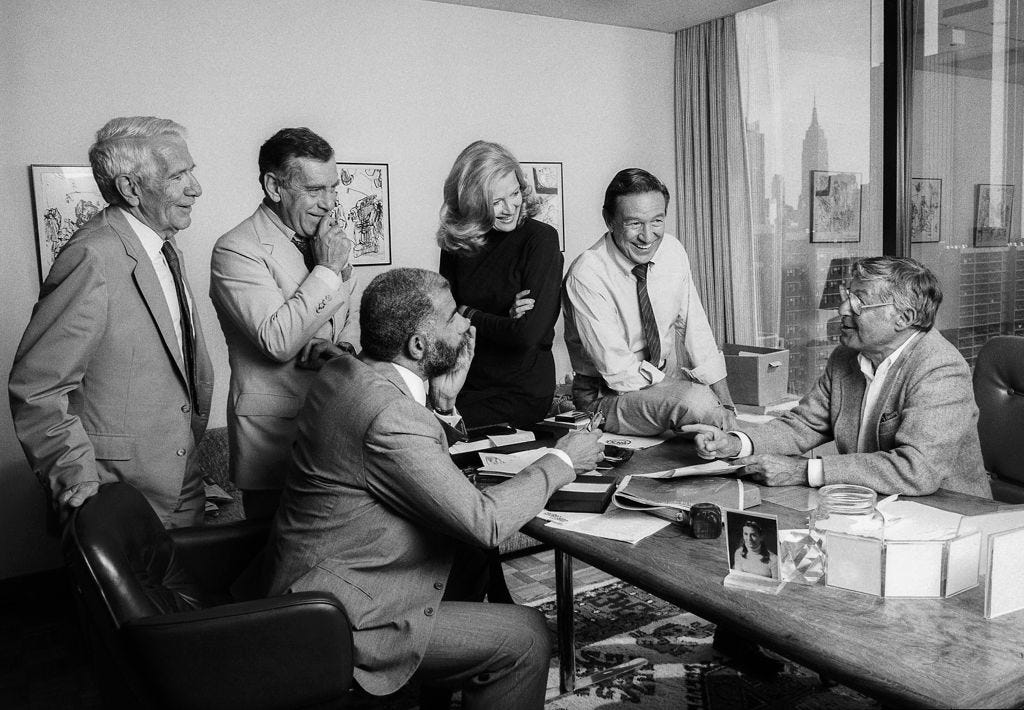
The eventual settlement, in which CBS paid Trump $16 million despite having done nothing wrong, helped smooth the merger’s path through federal regulators. So by the time the Ellisons officially took control, the pattern had already been established: when Trump complains, CBS caves.
Paramount Skydance, the company that owns CBS, is currently in the middle of a hostile takeover bid for Warner Bros. Discovery. The deal is valued at around $108 billion. If it goes through, the Ellisons would control an enormous swath of American media: CBS, Paramount Pictures, and potentially HBO, TBS, TNT, the Discovery networks, and CNN.
Yes, CNN. The deal Paramount is pursuing would give the Ellisons control of the cable news network that Trump has spent years attacking as “fake news.” On December 10, Trump said at a White House event that “it’s imperative that CNN be sold” and that “the people that have run CNN for the last long period of time are a disgrace.” David Ellison told CNBC that Paramount wants to “build a scaled news service that is basically, fundamentally, in the trust business, that is in the truth business, and that speaks to the 70% of Americans that are in the middle.” He didn’t mention that this vision apparently includes killing stories about torture when the administration doesn’t feel like commenting.
A deal that big requires regulatory approval. Specifically, it requires approval from the Department of Justice, which is run by the Trump administration.
Larry Ellison, David’s father and the co-founder of Oracle, has been a Trump supporter for years. He’s currently worth around $250 billion, making him one of the richest people on the planet. Just today, he personally guaranteed $40.4 billion to back the Warner Bros. Discovery bid. The Ellisons need this deal to happen, and they need Trump’s regulators to let it happen.
Trump has not been shy about the relationship. “They’re friends of mine. They’re big supporters of mine,” he said in October, after the Paramount-Skydance merger went through. “And they’ll do the right thing.”
What does “the right thing” mean when you’re building a media empire that depends on government approval? We might have just seen it. Trump complained about 60 Minutes on Friday. By Sunday, the critical story was dead.
I want to be careful here. I don’t know that Trump or anyone in his administration called the Ellisons and told them to kill the CECOT segment. I don’t know that David Ellison called Bari Weiss and told her to spike it. There may not have been any explicit directive at all.
But that’s the thing about how this kind of influence works. It doesn’t require explicit directives. Everyone involved understands the incentives. Weiss knows who signs her checks. The Ellisons know who approves their mergers. Trump knows that complaining publicly about coverage sends a message. The system doesn’t need a conspiracy to function. It just needs everyone to understand what’s good for business.
CNN reported that “Ellison’s allies are privately arguing that he is the only buyer who would pass muster with Trump administration regulators.” That’s a revealing detail. The Ellisons’ competitive advantage in the Warner Bros. bidding war is their relationship with Trump. Why would they jeopardize that relationship by airing a segment that makes his deportation policy look like a human rights catastrophe?
The invisible censorship
Here’s what I keep thinking about: this is probably the last time CBS will spike a story like this at the last minute.
Not because they’ve learned their lesson or because the backlash will change anything. But because they won’t need to. The dramatic, visible censorship of killing a promoted segment hours before air is embarrassing. It generates headlines. It makes correspondents write angry memos. It gives people like me something to write about.
The smarter approach is to make sure stories like this never get that far in the first place.
This is how censorship actually works in large institutions. It’s not a guy in a uniform stamping “REJECTED” on your script. It’s a thousand small calculations, made by dozens of people, about what’s worth pursuing and what isn’t. It’s a producer deciding not to pitch an investigation because she knows it’ll never get approved. It’s a correspondent not making certain phone calls because he’s seen what happens to colleagues who rock the boat. It’s a desk editor quietly steering coverage away from topics that might cause problems upstairs.
None of this requires memos or meetings or explicit orders. It just requires a few high-profile examples of what happens when you pursue the wrong story. The Alfonsi situation is that example. Every journalist at CBS News now knows that if you spend months working on a segment that makes the Trump administration look bad, it might get killed at the last second by someone who’s never worked in television news and who reports directly to a billionaire with business before the administration.
What do you think happens to the next story about immigration enforcement abuses? Or the next investigation into deportation policy? Or any story that might embarrass the White House at an inconvenient time?
Some of those stories will still get pitched. Some will still get made. CBS will still do critical coverage of the administration sometimes, if only to maintain the pretense of independence. But the calculus has changed. The risk-reward math is different now. And at the margins, that means stories that should get told won’t get told. Not because anyone explicitly killed them, but because they never got started in the first place.
That’s the kill switch working as intended. It doesn’t just stop one segment. It changes the entire editorial culture. It makes self-censorship so routine that nobody even notices it’s happening.
What comes next
Alfonsi’s memo said she cares “too much about this broadcast to watch it be dismantled without a fight.” According to CNN, some CBS staffers are “privately discussing whether they can continue working under the current leadership.” Others are “threatening to quit.”
I don’t know how much any of that matters. Alfonsi is one correspondent. The institution is being reshaped around her. The Ellisons have billions of dollars and a clear vision for what they want CBS to be. Weiss has a mandate from ownership to remake the news division. The journalists who are uncomfortable with the direction things are going can fight, or they can leave, but they probably can’t stop what’s happening. If they leave, they’ll be replaced with partisans who agree with the direction Weiss is pushing the network.
And what’s happening is the construction of something new: a media apparatus that spans broadcast, cable, streaming, and digital, controlled by a family with deep ties to the Trump administration, run on a day-to-day basis by someone whose commitment to free speech has always extended exactly as far as the interests she supports. If the Warner Bros. deal goes through, that apparatus will also include CNN, HBO, and a portfolio of cable networks reaching tens of millions of Americans.
The 60 Minutes that broke the Abu Ghraib story, that made powerful people afraid of the phrase “Mike Wallace is here,” is not long for this world. Maybe it’s already gone. What replaces it will look like 60 Minutes. It’ll have the same theme music and the same ticking stopwatch. It might even do good journalism sometimes, on topics that don’t threaten the interests of ownership or the administration they depend on.
But it won’t be the same thing. You can’t be an “investigative powerhouse,” as Alfonsi put it, if the subjects of your investigations can veto your stories by refusing to participate. You can’t hold power accountable if the people who sign your checks need favors from that power. You can’t tell the truth if telling the truth is bad for business.
Somewhere out there, there’s a story about the next human rights abuse, the next government scandal, the next thing the administration doesn’t want Americans to know about. Maybe it involves CECOT. Maybe it involves something we haven’t heard of yet. Under the old rules of journalism, a network like CBS might have pursued that story, taken the heat, and trusted that the audience would reward them for it.
Under the new rules, that story probably won’t get pitched. And if it does get pitched, it won’t get approved. And if it somehow does get approved, it’ll get killed before it airs, just like the CECOT segment, because somebody upstairs will decide it’s not worth the trouble.
That’s the kill switch. It’s working perfectly.
This is a hugely important essay. The public MUST learn who Bari Weiss is! I hope @Katie Couric @Dan Rather @Jim Acosta @Anand Giridharadas @Anthony Davis 🎙️ @Timothy Snyder @Ruth Ben-Ghiat @Heather Cox Richardson @THE LEFT HOOK with Wajahat Ali @Mehdi Hasan @Jay Rosen @Margaret Sullivan all share your essay, adding their own commentary. Thank you for doing the research needed to tell this story!
It’s not clear how much of this was actually directed from Ellison, how much comes from Weiss’s natural Republican/fascist inclinations, and how much comes from the fact that, for all her journalism-adjacent credits, she’s never worked a day as an actual journalist in her life. I’m sure it’s a combination of these things.